Sixteen figures: Page, Knight, Queen, King
The Court Cards
The hardest sixteen cards in the deck, because each one can be a person, a role you are playing, or an approach to take, and the card will not tell you which.
About the court cards
Every suit ends with four figures: a Page, a Knight, a Queen and a King. Sixteen cards in total, and by common agreement the part of the deck readers struggle with longest.
The difficulty is not the meanings. It is the ambiguity of reference. A court card can be another person in the situation, it can be you, or it can be a stance available to you, and nothing in the card announces which. Most bad court card readings come from picking one of those three by habit rather than by reading.
The rank gives you the maturity and the mode. The suit gives you the element and the domain. King of Swords is authority expressed through thought and judgement; Page of Cups is a beginner in the territory of feeling. Those two axes will carry you a long way before you need anything else.
All 16 cards
Every card links to its full meaning: upright, reversed, love, career, money, spirituality, health, symbolism and history.
 Page of Wands read the full meaning
 Knight of Wands read the full meaning
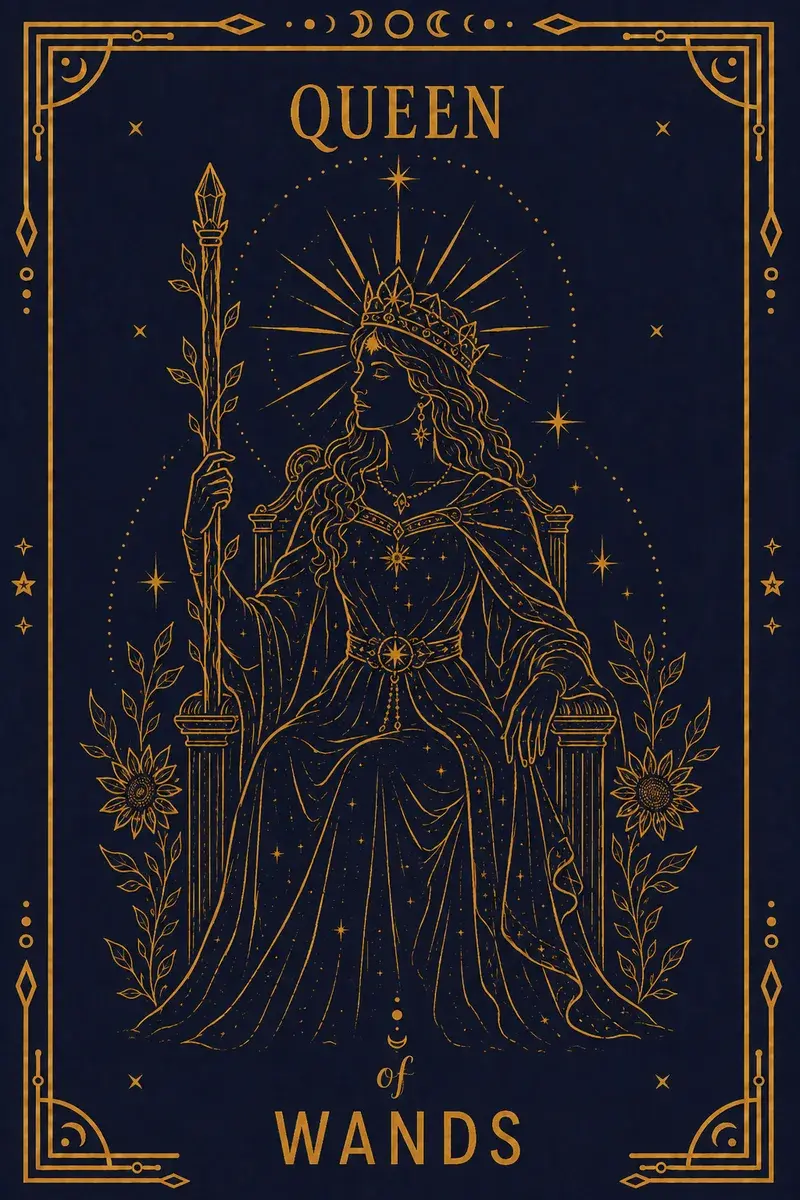 Queen of Wands read the full meaning
 King of Wands read the full meaning
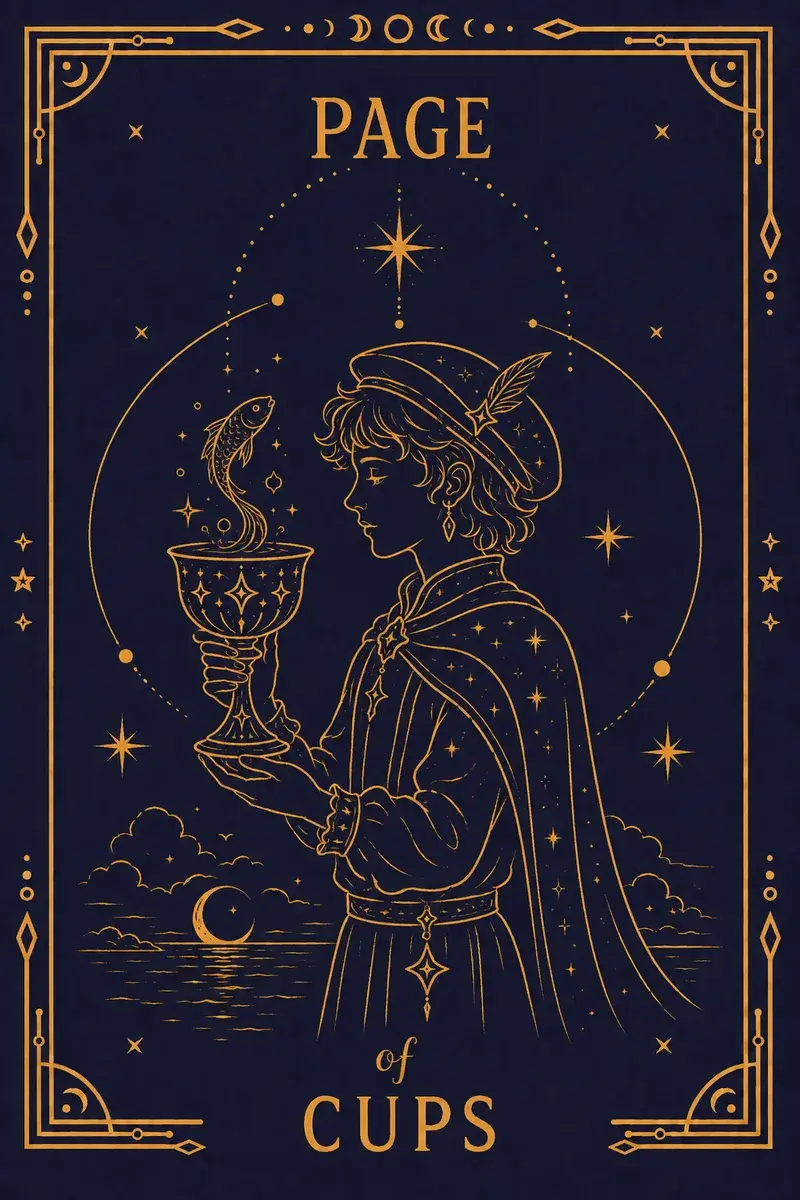 Page of Cups read the full meaning
 Knight of Cups read the full meaning
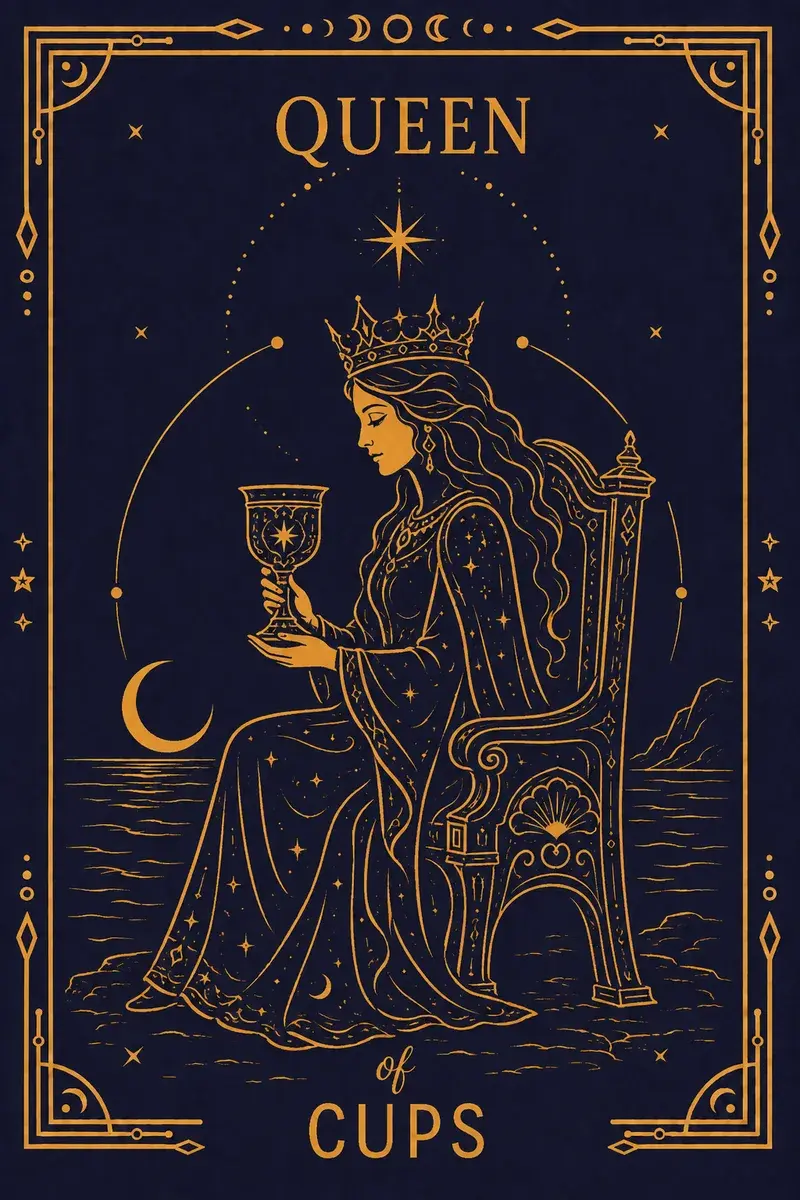 Queen of Cups read the full meaning
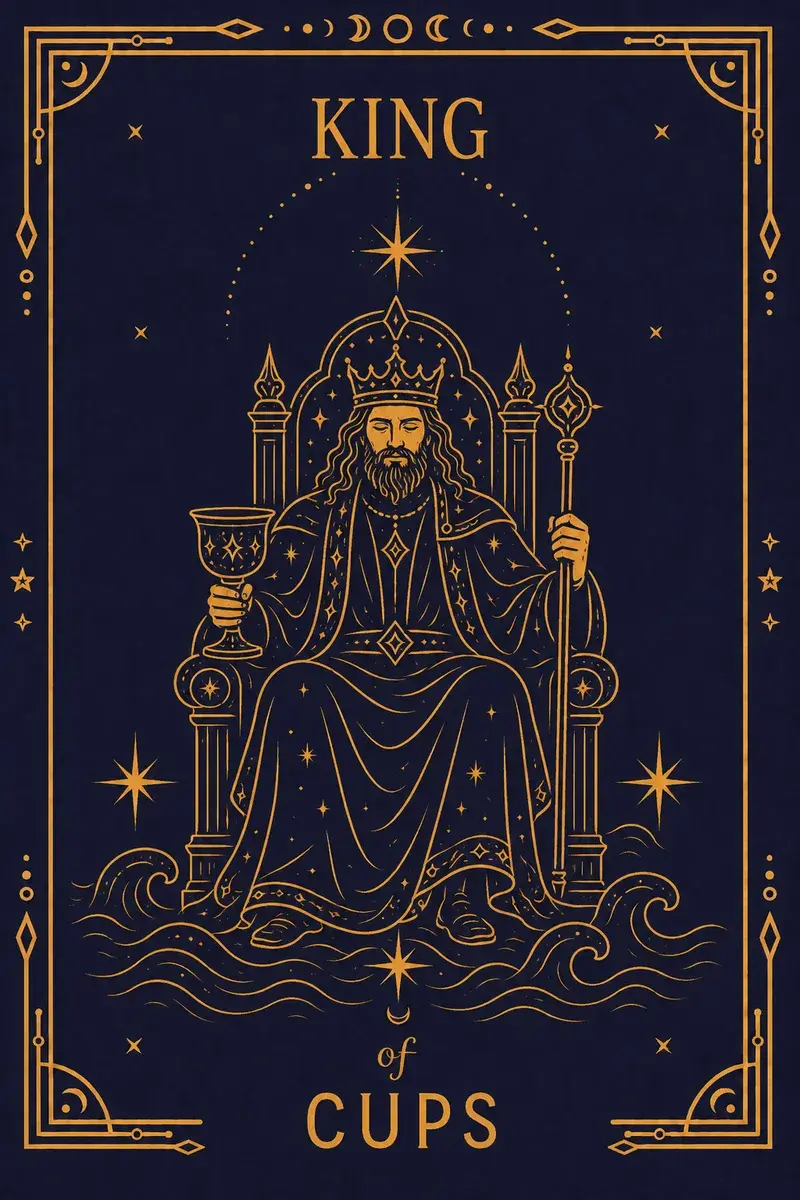 King of Cups read the full meaning
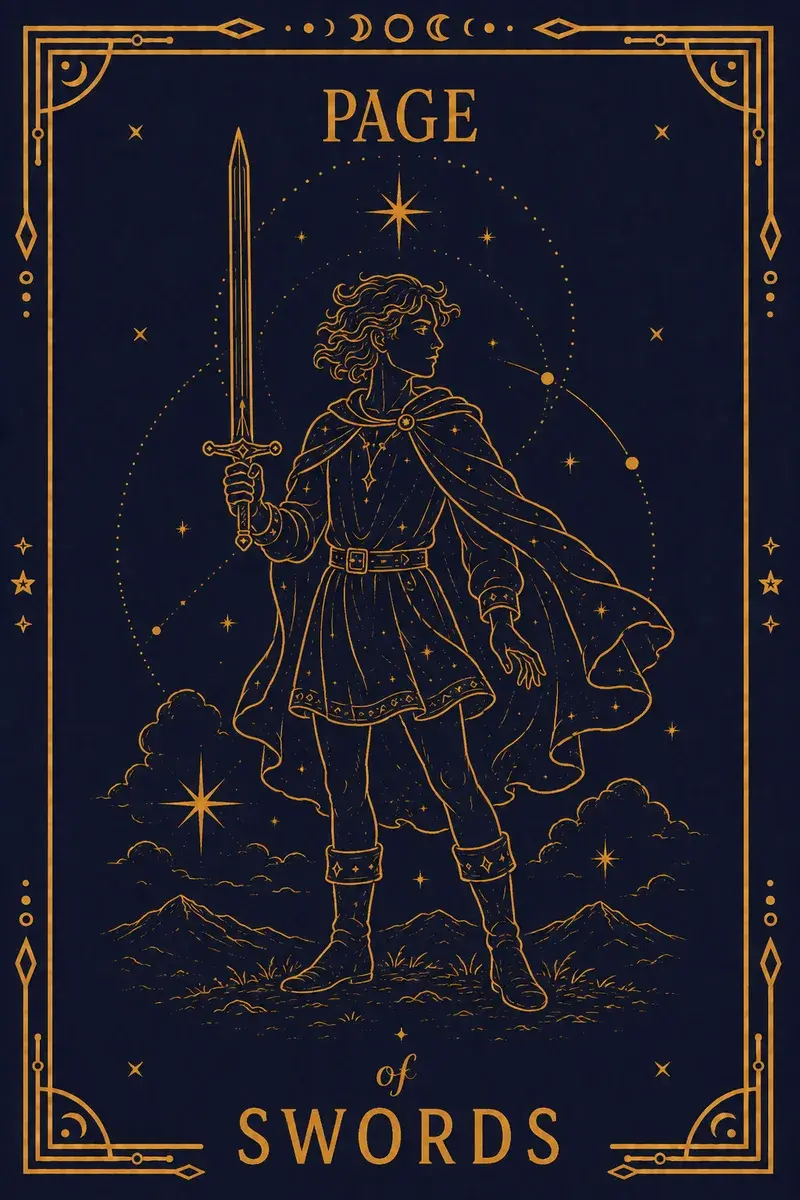 Page of Swords read the full meaning
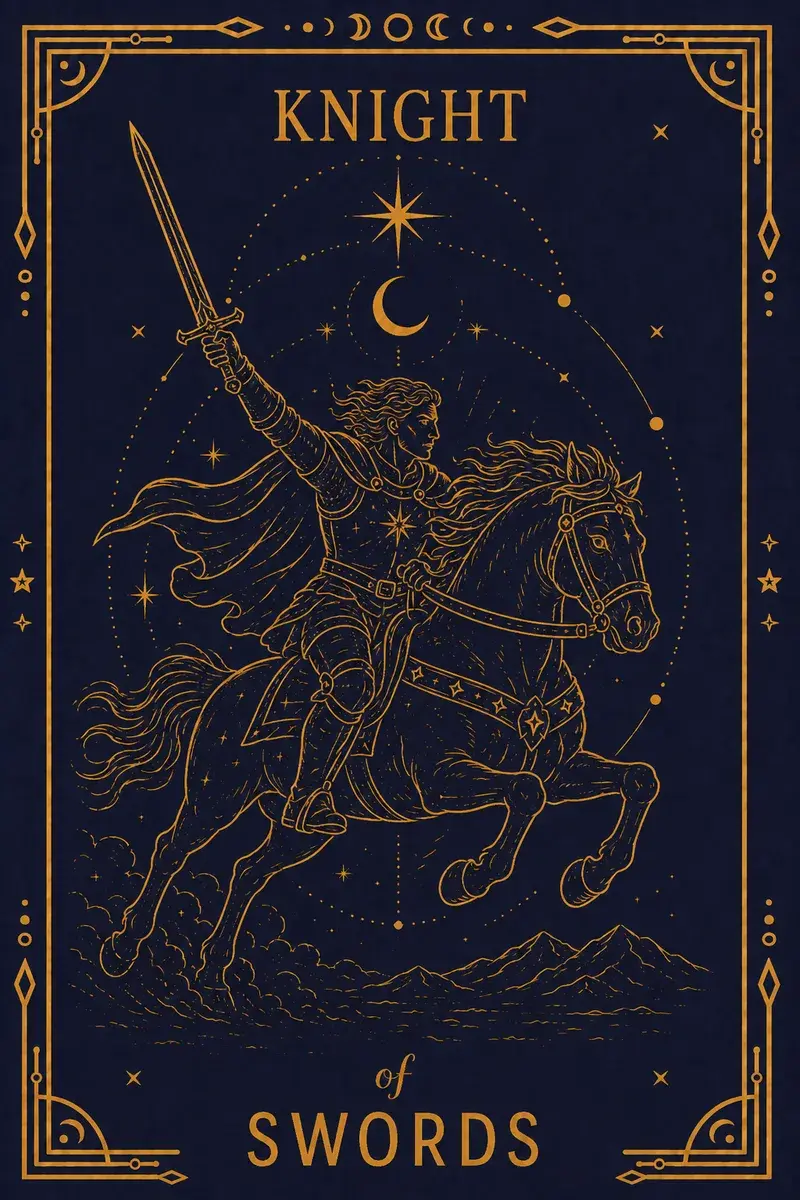 Knight of Swords read the full meaning
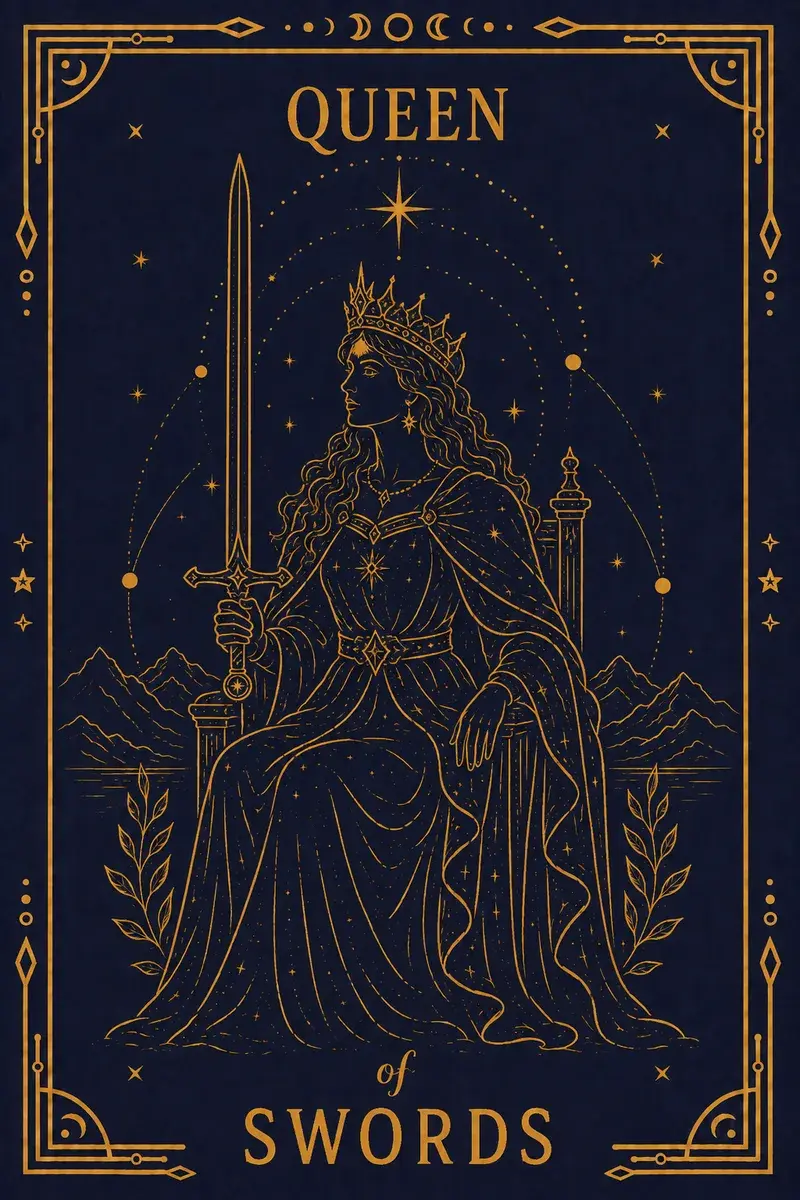 Queen of Swords read the full meaning
 King of Swords read the full meaning
 Page of Pentacles read the full meaning
 Knight of Pentacles read the full meaning
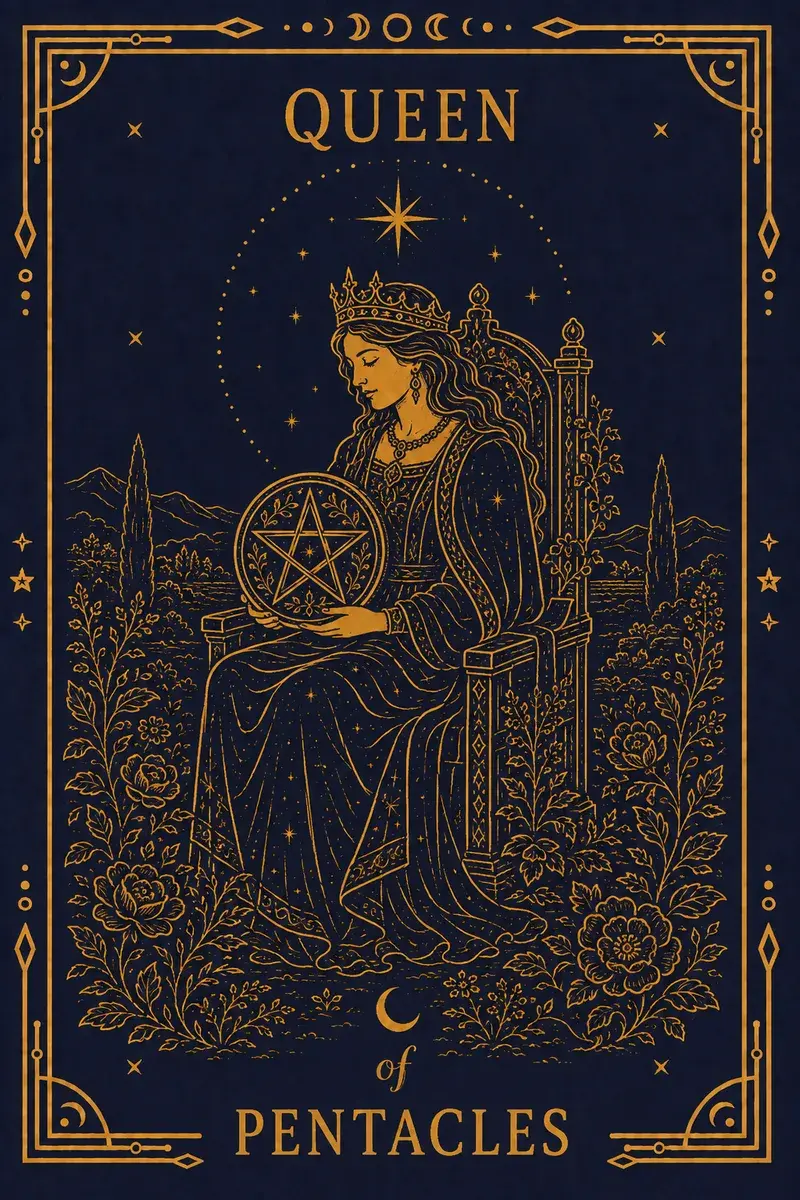 Queen of Pentacles read the full meaning
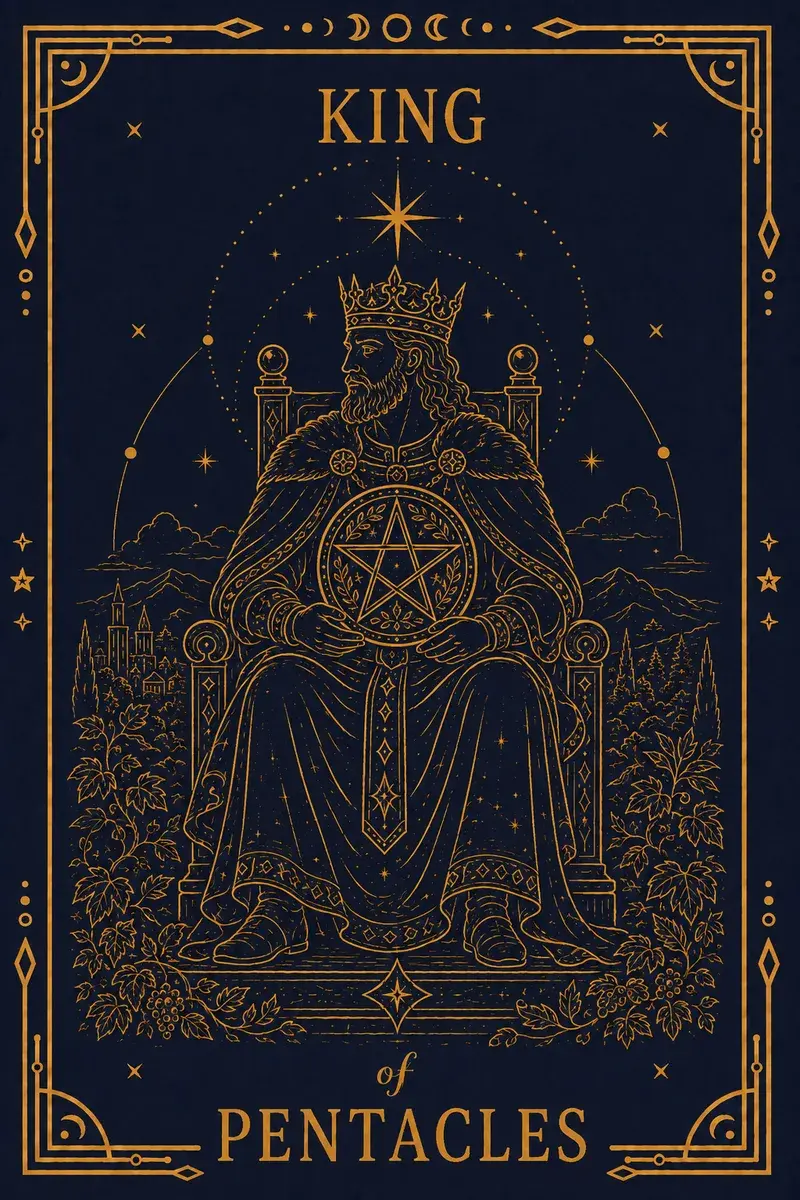 King of Pentacles read the full meaning
The four ranks
Pages are beginners and messages. Something new arriving, or someone new to this. Read a Page as early rather than immature: the enthusiasm is real and the experience is not there yet.
Knights are movement and single-mindedness. A Knight is going somewhere at speed and is not weighing much on the way. Useful when a situation needs force, expensive when it needs care.
Queens hold rather than push. Mastery turned inward: they understand the suit's territory from the inside and they do not need to act on it to prove that. Often the most useful figure in a difficult spread.
Kings are authority and the outward exercise of it. The suit's power made public and accountable. Two Kings in a spread is usually a question about whose decision this actually is.
Person, self, or approach
The one question worth asking every time a court card lands: does this describe somebody else, describe me, or describe something I could do?
A workable order of preference. If the spread already has a position for another person, take it as a person. If it is in a position about you, read it as the stance you are taking, especially when you would rather it was about somebody else. Otherwise read it as an approach, because that is the version you can act on.
The traditional shortcut of matching courts to people by age, gender or colouring is genuinely old and genuinely unreliable. Nothing on this site uses it.
The same cards, read across the suits
All four Fives together, all four Queens together. This is the cut that makes forty numbered cards learnable.
The rest of the deck
Learning this properly
Reading every card page in one sitting is the slowest way to learn the deck. The course covers the structure first, which is what turns 78 things to memorise into four suits, ten numbers and twenty-two archetypes.
About the court cards
Straight answers, without the mystique.
Sixteen: a Page, Knight, Queen and King in each of the four suits.
Sometimes. They can equally describe the stance you are taking or an approach available to you, and the card does not say which. The position it landed in usually does.
Because their meanings are not the problem. Their reference is. Sixteen figures with overlapping personalities, any of which might be someone else, you, or a suggestion, takes practice to read confidently.