What Questions to Ask Tarot (and What Not To)
The question decides the reading. How to turn a vague worry into something the cards can answer, and the four question types that produce useless readings.
One card, drawn now
No question to type, no account, no email. One card from all 78, shuffled on the server, with the whole of its meaning rather than a keyword.
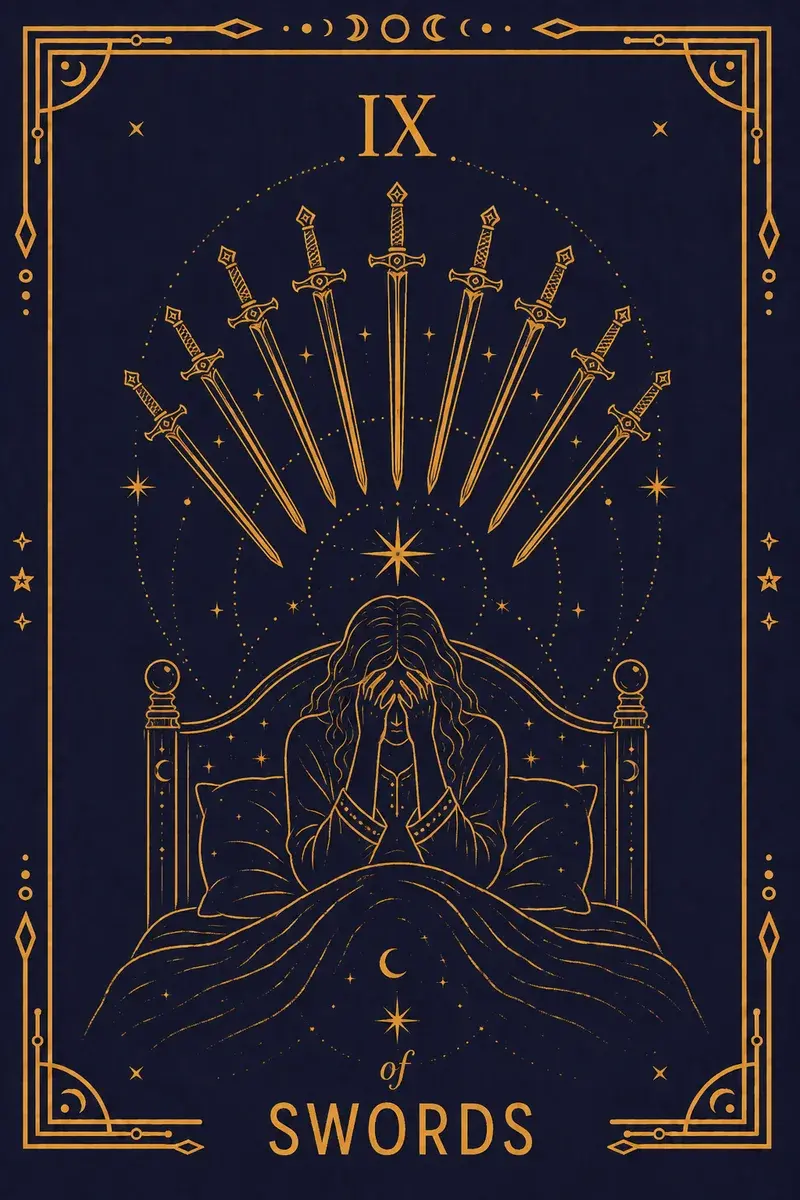 Nine of Swords
The Nine is the three-in-the-morning card. Anxiety, dread, the mind running the worst version on a loop. The suffering is genuine and it is almost entirely happening in the dark, in advance.
Anxiety, insomnia, guilt, mental anguish. Fear that has outgrown its cause. Real distress that needs support rather than reasoning with.
The draw uses a cryptographic random source with a Fisher-Yates shuffle, and the reversal is a separate coin flip. Nothing is weighted toward the pleasant cards, which some sites do quietly. You are as likely to get the Ten of Swords as the Sun.
A card pulled with no question attached is a prompt rather than an answer. If you want it to mean something, give it something to be about first: a single card reading lets you state the question, and the meaning that surfaces changes with it.
Drawing one card a day is the fastest way to learn the deck. Here is the version that survives a normal week.
For reflection and entertainment. Not medical, legal, or financial advice.
One card is the reading experienced readers use most. These cover doing it well.
The question decides the reading. How to turn a vague worry into something the cards can answer, and the four question types that produce useless readings.
A reversed card is not a curse. Four ways to read reversals (blocked, internal, out of balance, or emphasis) and why sticking to one system matters.
Yes, but it is the easiest form of tarot to do badly. The four traps of reading for yourself, and the habits that keep a self-reading honest.