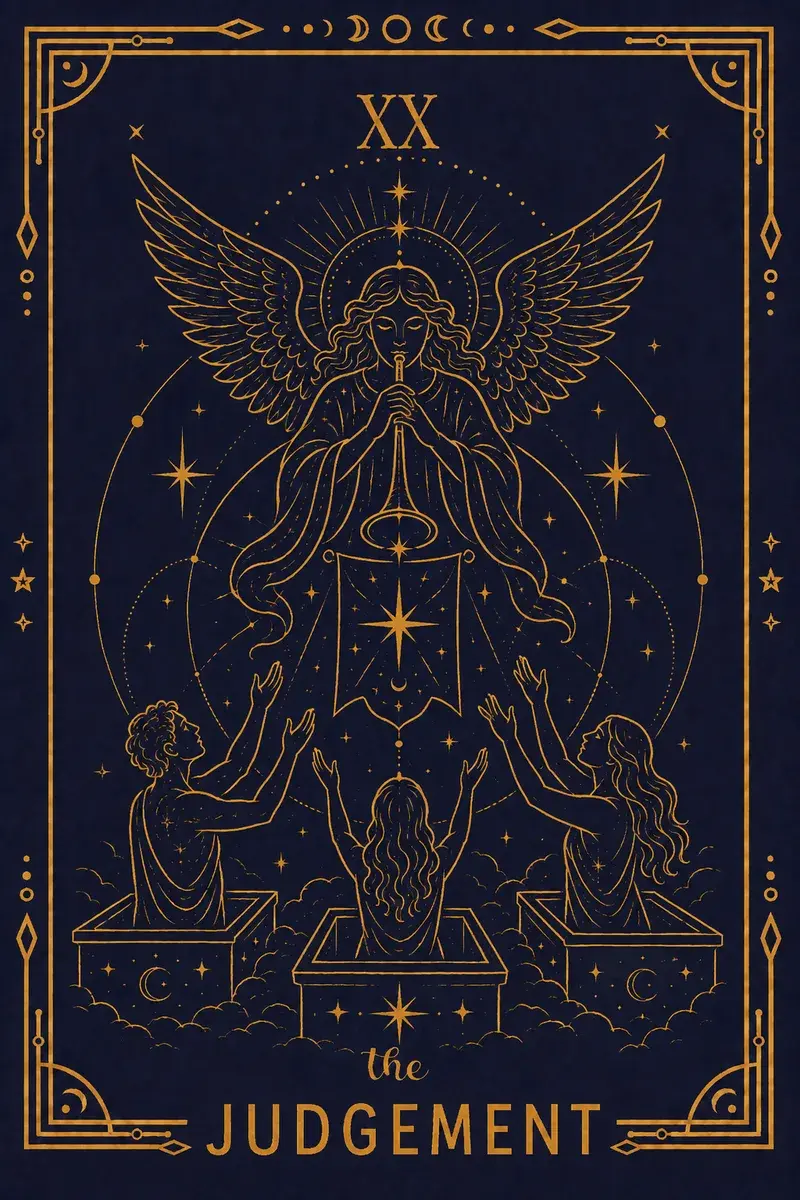
 Judgement
Judgement · Yes or No
Is Judgement a yes or a no?
Judgement in a yes/no reading, plus why the answer is less binary than the question wants it to be.
Yes
This card leans yes. It carries forward movement, and in a straight yes/no draw most readers take it affirmatively.
Judgement is the reckoning that wakes you up. A call arrives, the whole of your history is visible at once, and you answer it.
This is not condemnation, and the picture is careful about it. The figures rising from the coffins have their arms raised and they are not pleading, they are answering. The card is the moment of accurate self-assessment and the decision that follows from it.
Man, woman and child rise together, which the tradition reads as collective rather than individual: whatever this is, it is not happening to you alone. The mountains behind are the same range that appears in Death and Temperance.
Why the answer is not really binary
Yes/no readings are the most popular use of tarot and the one it is worst suited to. A seventy-eight card deck built to describe nuance is being asked for one bit of information, and most of what it knows is discarded in the process.
A more useful version of the same draw: read Judgement as what shape this takes, not whether it happens. Awakening, absolution, a calling. Reviewing your life honestly and choosing accordingly. Second chances, reunions, and long-delayed forgiveness of others or of yourself.
The distinguishing feature is scope. Justice weighs one matter; Judgement takes the whole of it at once, which is why the card so often arrives at the end of a long period rather than in the middle of a situation.
In an advice position it asks for an honest total rather than another adjustment. It is a poor card for tinkering and a strong one for the decision that has been available for years.
Reversed
Reversed, the lean weakens or inverts. Ignoring the call. Harsh self-judgement standing in for actual change. Refusing to forgive, or refusing to be forgiven.
The second is the one to watch, because it looks like accountability. Somebody who is extremely hard on themselves and has changed nothing has substituted the feeling of reckoning for the act of it, and the card reversed is unusually good at spotting the difference.
Also read for the reckoning postponed, which does not make it go away and generally makes it larger. The tradition is not threatening about this so much as arithmetical.
Draw it for yourself
Reading about a card is not the same as drawing one. A single-card reading takes about a minute and answers your question rather than a general one.