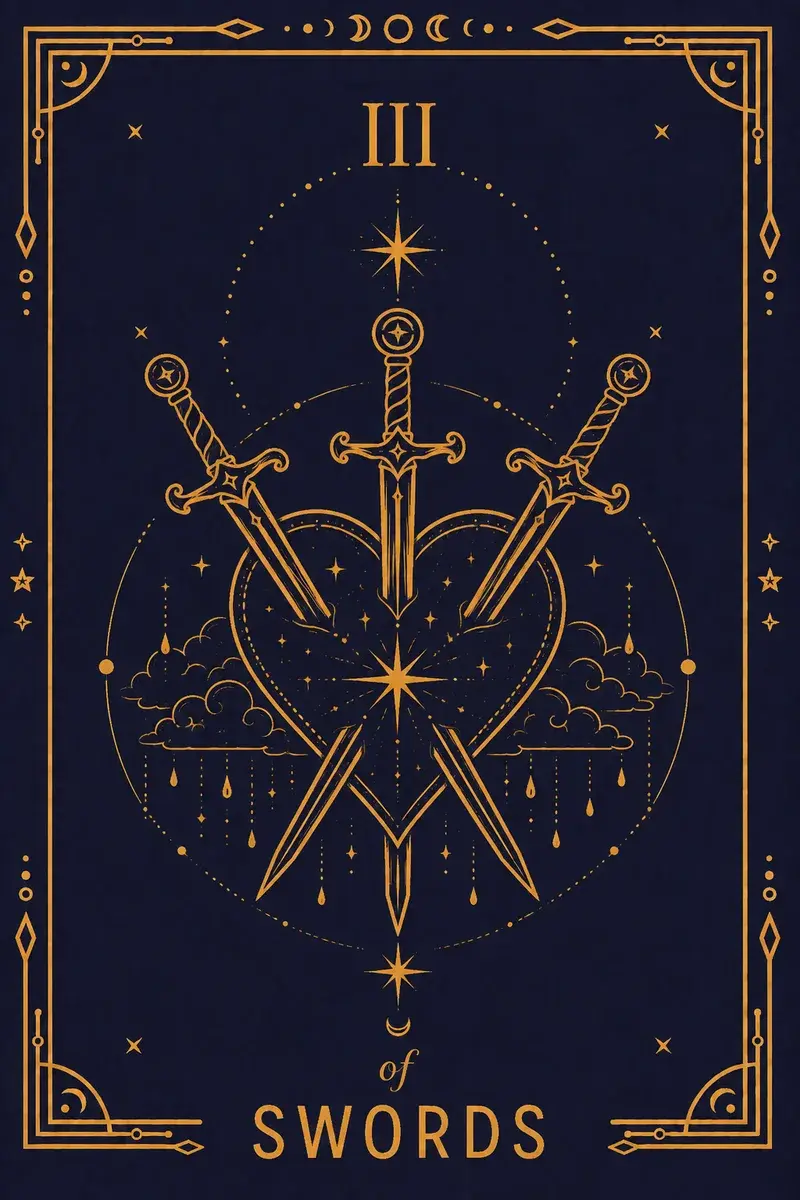
 Three of Swords
Three of Swords · Yes or No
Is Three of Swords a yes or a no?
Three of Swords in a yes/no reading, plus why the answer is less binary than the question wants it to be.
No
This card leans no. It carries obstruction, ending or delay, and in a straight yes/no draw most readers take it negatively.
The Three is heartbreak, stated without decoration: painful truth, betrayal, grief with a specific cause.
It is one of the most literal images in the deck and one of the least ambiguous. Three swords pierce a red heart against grey rain, and there is no human figure. That absence is why it lands so directly: there is nobody to identify with and nothing to interpret around.
It is one of only two Smith minors with no person in it, alongside the Eight of Wands, and the choice is clearly deliberate in both cases.
Why the answer is not really binary
Yes/no readings are the most popular use of tarot and the one it is worst suited to. A seventy-eight card deck built to describe nuance is being asked for one bit of information, and most of what it knows is discarded in the process.
A more useful version of the same draw: read Three of Swords as what shape this takes, not whether it happens. Heartbreak, rejection, a truth that wounds.
It has happened, and the card does not offer a way around it. This is the deck at its least consoling and its most respectful: no reframe, no silver lining, no suggestion that it was for the best.
The one thing it does say is in the weather. The image includes the rain for a reason, and rain clears. That is offered as a fact rather than as comfort, which is the correct register for it.
Reversed
Reversed, the lean weakens or inverts. Beginning to heal, or refusing to.
Pain held onto past its term is the harder reading, and the card is gentle about why that happens: releasing a hurt can feel like agreeing it did not matter, which is not a trade most people will make.
Sometimes forgiveness, sometimes a wound reopened by something small that nobody else would connect to it. Both are ordinary and neither is a failure of progress.
Draw it for yourself
Reading about a card is not the same as drawing one. A single-card reading takes about a minute and answers your question rather than a general one.
More on Three of Swords
- What does Three of Swords mean in love?
- What does Three of Swords mean for career and work?
- What does Three of Swords mean for money and finances?
- What does Three of Swords mean for health?
- What does Three of Swords mean as someone's feelings?
- What is Three of Swords advising?
- What does Three of Swords reversed mean?