How to Learn Tarot Card Meanings Without Memorising
Seventy-eight cards is a lot to memorise and you do not have to. The structure that turns most of the deck into logic, and the habit that does the rest.
 The High Priestess
Major Arcana · II
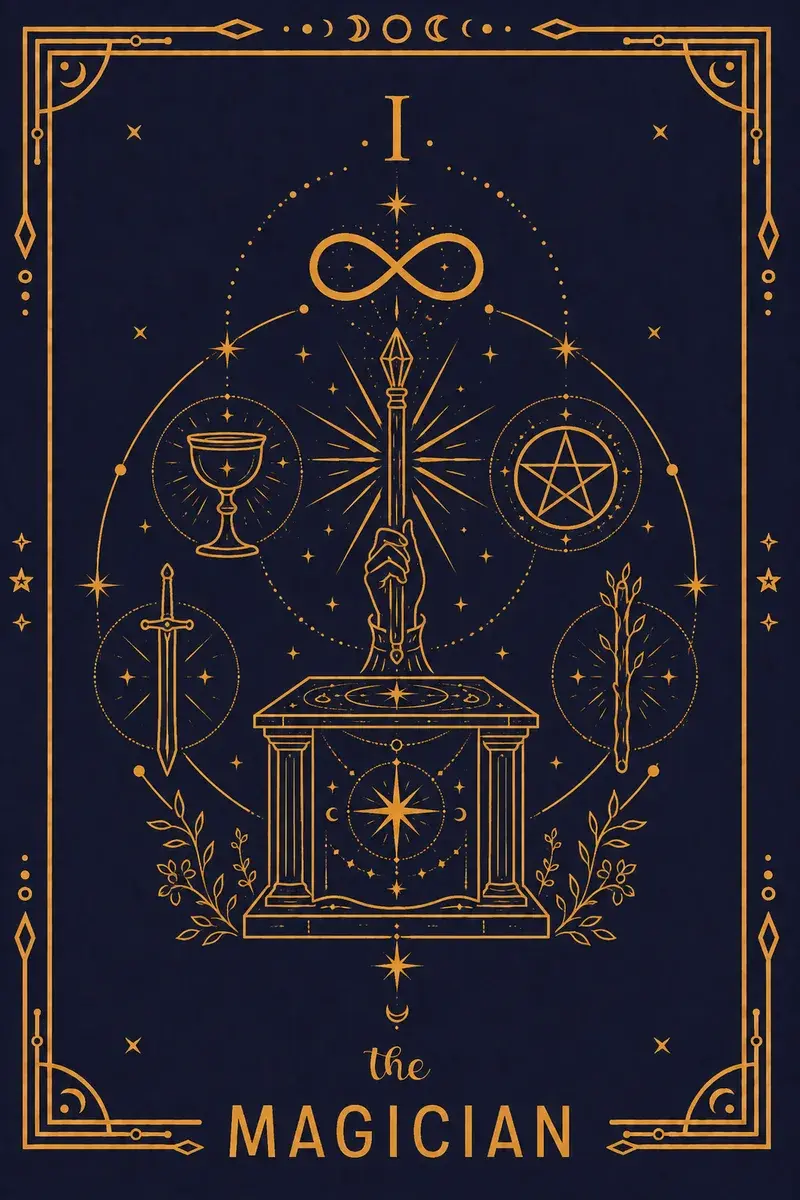
The High Priestess guards what has not been spoken. She is the counterweight to The Magician: where he acts outward, she holds still and knows. This is the card of the answer you already have and have not admitted.
Affirmation
“I already know. I do not need to say it yet.”
The High Priestess guards what has not been spoken. She is the counterweight to The Magician: where he acts outward, she holds still and knows. This is the card of the answer you already have and have not admitted.
Trust the read you cannot yet justify. Withhold rather than explain. Something is being kept from you, or by you, and it is not yet time for it to come out. Study, dreams and inner work are favoured over external effort.
Disconnection from your own instinct, talking over it, outsourcing the decision, or ignoring a signal your body has already given you. It can also indicate secrets surfacing, or information deliberately withheld to your cost.
An attraction with depth that has not been named out loud. Restraint is doing real work here. Reversed, it points to a relationship where too much is unsaid for either person to act honestly.
Research, analysis, anything requiring discretion. Do not show your hand yet. A good card for study and preparation, a poor one for forcing a decision or making a public move.
Information you do not have is material to this decision. Wait. Reversed, it warns of a financial arrangement whose terms are being kept vague on purpose.
The card's home ground. Dreamwork, contemplative practice, divination itself. Knowledge that arrives sideways and cannot be forced into argument.
Listen to the symptom you have been explaining away. Cycles matter: sleep, hormonal rhythm, anything lunar and recurring. Rest is the intervention.
For reflection and entertainment. Not medical, legal, or financial advice.
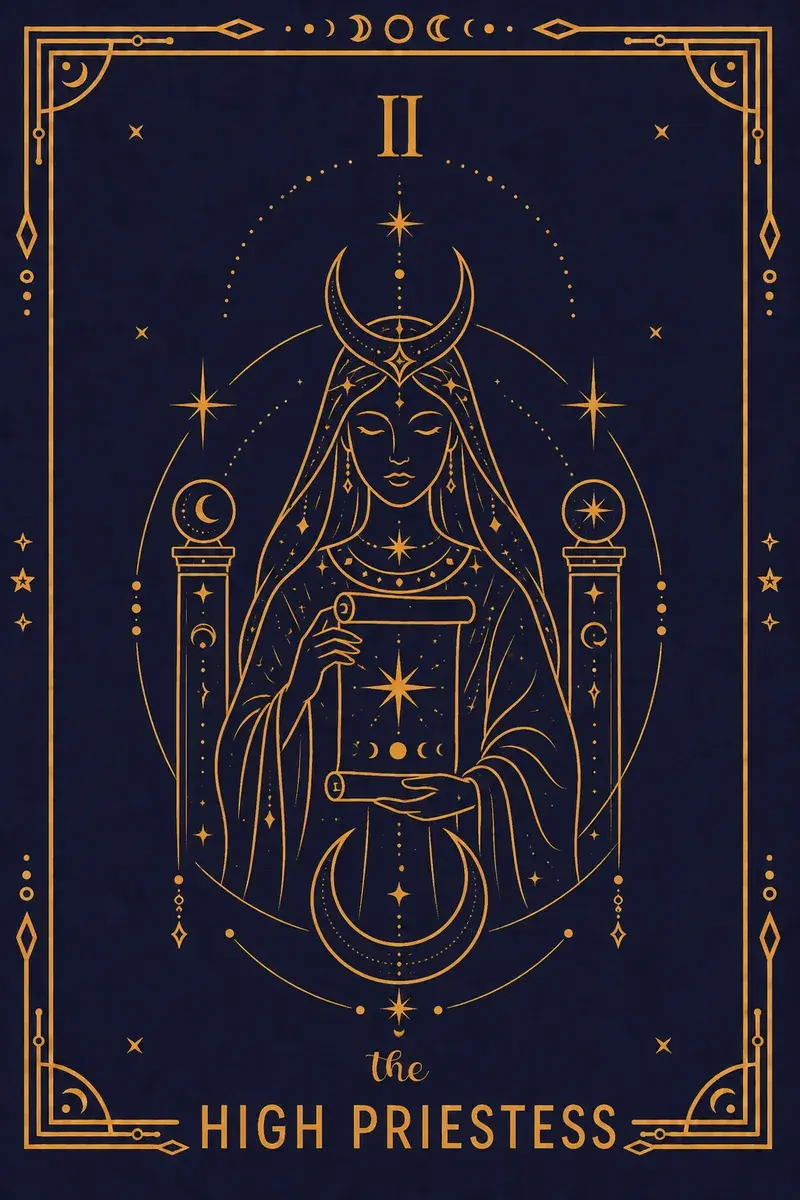
She sits between the pillars Boaz and Jachin, black and white, at the threshold of the temple, the point of decision itself. The veil of pomegranates behind her hides what is beyond; the scroll marked TORA is half-concealed in her robe, readable only in part. The crescent at her feet is the subconscious she rests on.
Early decks called her La Papessa, the Popess, almost certainly referencing the legend of Pope Joan: a card contentious enough that some Italian printers replaced her with Juno to avoid offence. Waite renamed her The High Priestess and gave her the Isis-derived lunar crown, moving her from ecclesiastical satire to esoteric symbol.
Written by Memento Arcana against the Rider-Waite-Smith deck and the Golden Dawn attributions it was built on. No part of it was generated by a language model. Last updated 7 August 2026.
Where traditions disagree about this card, the page says so rather than picking one quietly. How we write these, and our sources.
How The High Priestess has actually shown up for other readers.
Nothing here yet. Be the first to say how this card has landed for you.
Guides to reading this card alongside the other 77.
Seventy-eight cards is a lot to memorise and you do not have to. The structure that turns most of the deck into logic, and the habit that does the rest.
Two cards together mean more than two cards apart. A four-step method: dominant card, elements, the tension between them, then back to your question.
The 22 majors are the themes you do not choose. The 56 minors are daily life. What each half does, and what it means when one dominates a reading.