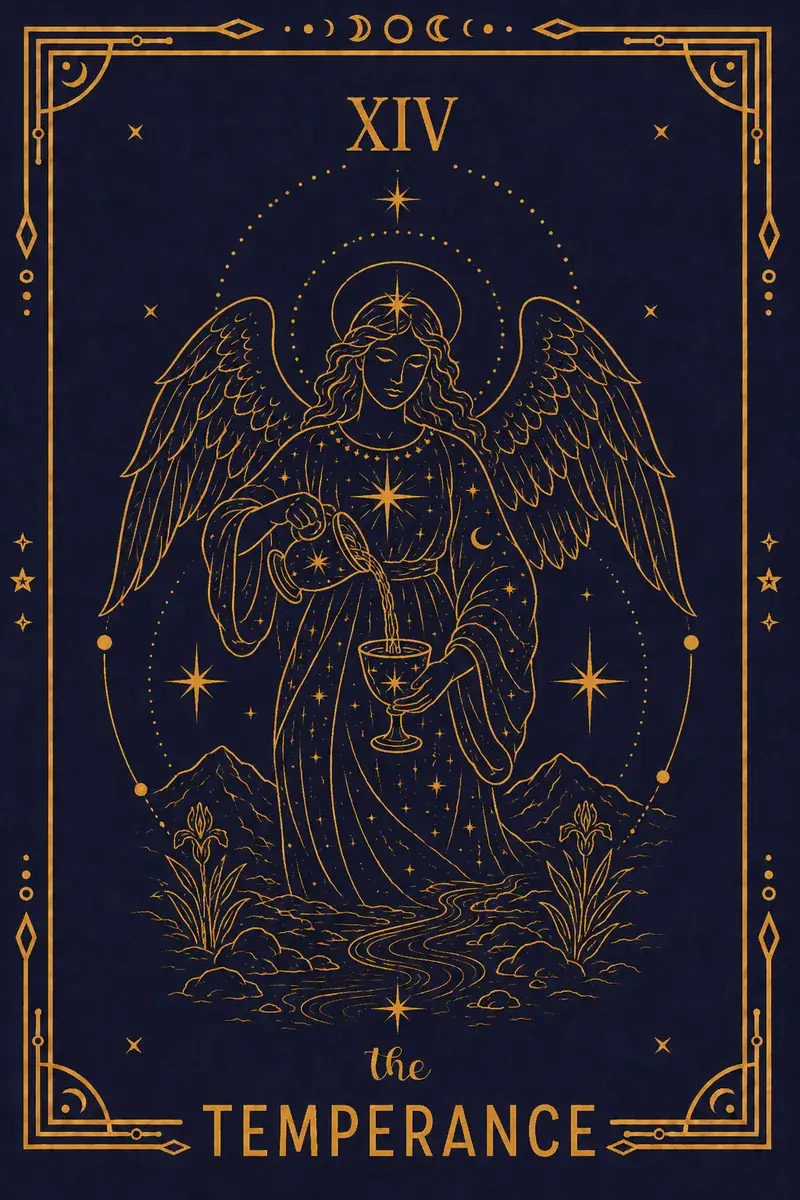
 Temperance
Temperance · Yes or No
Is Temperance a yes or a no?
Temperance in a yes/no reading, plus why the answer is less binary than the question wants it to be.
Yes
This card leans yes. It carries forward movement, and in a straight yes/no draw most readers take it affirmatively.
Temperance is the art of proportion. Two things that do not obviously belong together are combined into a third that is better than either, and the skill is entirely in the ratio and the patience.
The name is older than its modern sense. It comes from temperare, to mix in proportion, and it was about watering wine long before it was about abstaining from it. The card is not asking you to have less. It is asking you to get the ratio right, which is a more interesting and more difficult instruction.
The angel stands with one foot on land and one in water, and the stream between the cups runs at an angle no liquid would. Both details say the same thing: this is a process that does not obey the ordinary rules, and it cannot be hurried.
Why the answer is not really binary
Yes/no readings are the most popular use of tarot and the one it is worst suited to. A seventy-eight card deck built to describe nuance is being asked for one bit of information, and most of what it knows is discarded in the process.
A more useful version of the same draw: read Temperance as what shape this takes, not whether it happens. Moderation, blending, patient recalibration. Find the middle without making it a compromise nobody wants. Healing follows here, and it follows slowly.
It is one of the best cards to draw after any of the deck's harsher trumps, because it describes the period afterwards: the recovery, the adjustment, the slow work of getting a life back into proportion. The Tower knocks something down and Temperance is what happens over the following year.
In an advice position it favours a small adjustment repeated over a large correction made once. It is a poor card for decisive action and an excellent one for anything that has been oscillating between extremes.
Reversed
Reversed, the lean weakens or inverts. Excess or imbalance. Overcorrection. Impatience with a process that only works at its own pace. It can also mean two things being forced together that genuinely do not mix.
Overcorrection is the reading most worth watching for, because it looks like progress. Somebody who was working too much and is now not working at all has not found the middle; they have found the other end, and the card reversed is often describing the second swing rather than the first.
The last reading is the harshest and is occasionally correct. Not everything blends, and a great deal of effort gets spent proving otherwise before the conclusion arrives anyway.
Draw it for yourself
Reading about a card is not the same as drawing one. A single-card reading takes about a minute and answers your question rather than a general one.