Planetary attribution
The tarot cards of Neptune
Dissolution, surrender and the view that only comes from letting go.
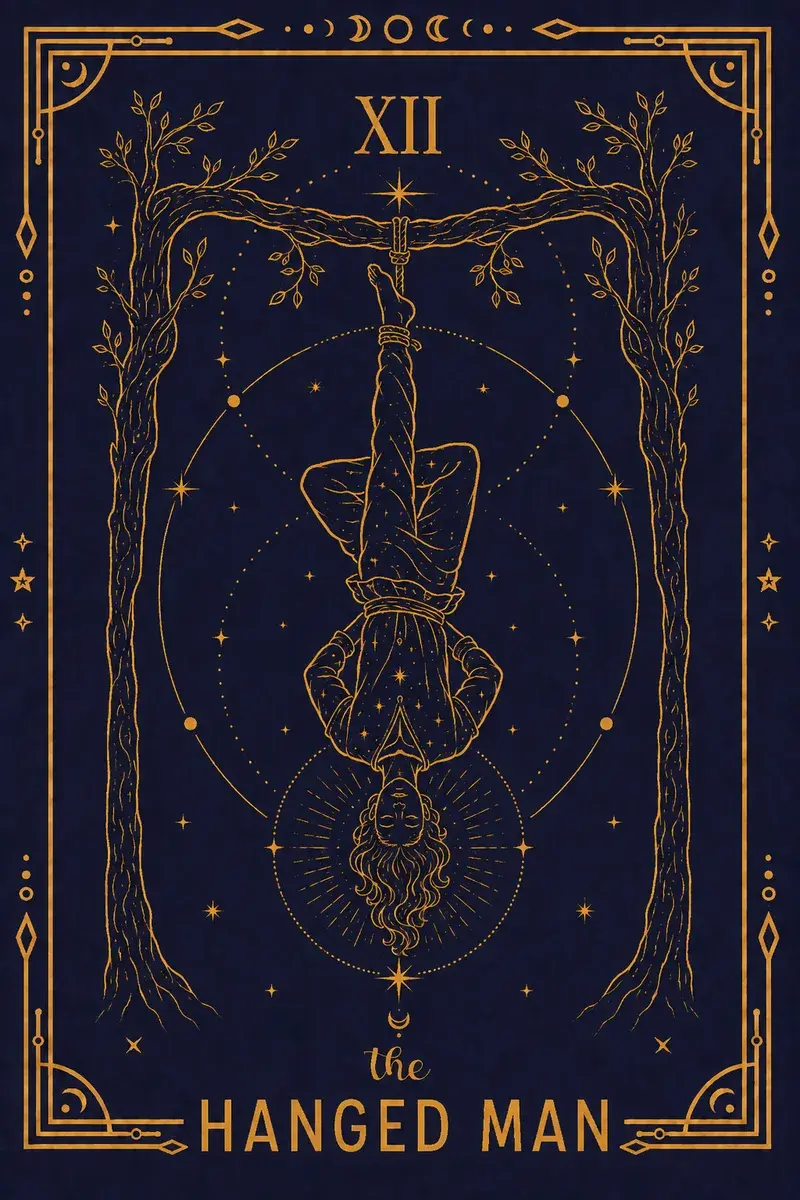
Neptune takes The Hanged Man, and only that. Like the other outer planets it arrived too late to be given pips: Neptune was found in 1846, decades before the Golden Dawn fixed the numbered attributions, but the system was already built on the seven classical bodies and it was easier to bolt the new ones onto spare trumps than to rebuild it.
The correspondence is one of the better modern additions. Neptune dissolves boundaries and resists effort, and The Hanged Man is a figure who has stopped struggling and is getting something out of it. Both are about a surrender that is not defeat.
Both are also easy to romanticise, and the deck is careful about that. The Hanged Man is suspension entered willingly and it is still suspension: nothing moves, and the view is the only thing you get in exchange.
1 card
A single trump. The modern planets were fitted to the deck long after the numbered cards were attributed, so they take one card each and no pips.
The other planets
Where these attributions come from
The Hermetic Order of the Golden Dawn, in the late nineteenth century. They mapped the whole deck onto the zodiac, the planets and the Hebrew alphabet, and the Rider-Waite-Smith deck was built on that system, which is why most modern decks still inherit it.
It is a system rather than a discovery. The fifteenth century Italian decks had no astrological scheme at all, and other traditions map the cards differently. Every attribution on this site is the Golden Dawn one, and where a card is disputed its own page says so.
Neptune in an actual chart
This page is about what the tarot tradition attaches to Neptune. The astrology itself, calculated from real ephemeris data rather than described, is on our sister site.
Neptune on Memento Astra