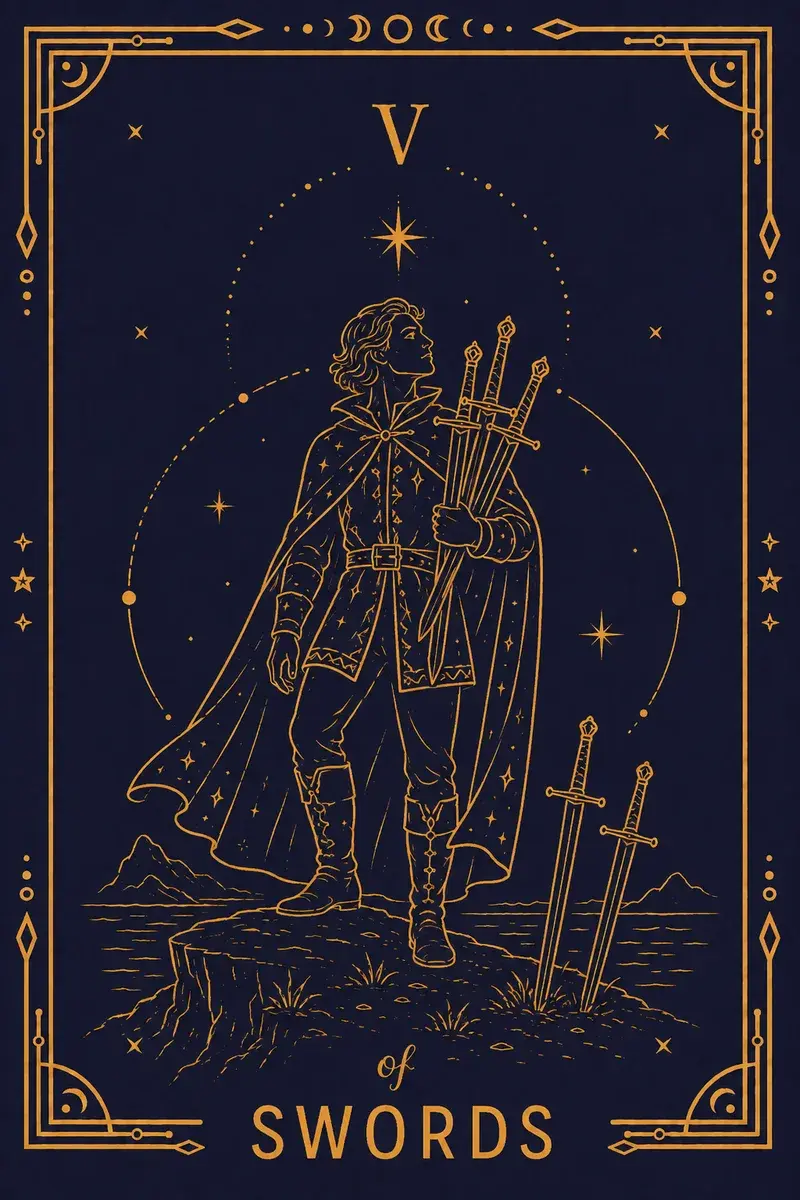
 Five of Swords
Five of Swords · In Love
What does Five of Swords mean in love?
Five of Swords in a love or relationship reading. What it says about connection, what it asks of you, and how it changes upright versus reversed.
In love and relationships
An argument that damages more than it settles. Point-scoring, and the accumulation of small victories that leave the relationship worse.
The specific pattern is winning exchanges rather than resolving subjects. Nobody wins a relationship, and the card is one of the deck's plainest statements of that.
Reversed, reconciliation, or a grudge with no expiry. The second is worth naming: a defeat that was never conceded can sit inside a relationship for a decade and surface in arguments about something else entirely.
As somebody's feelings, it reads as defensive and probably hurt underneath. Hostility here is usually protective, which explains it without excusing anything.
Upright
Conflict won at too high a price. Hollow victory, hostility, somebody walking away.
Ask what you are actually trying to achieve, because it is probably not this. The card is not against conflict and does not counsel avoidance; it is against a particular way of finishing one.
In an advice position it asks what you will have when you have won, which is a question that answers itself in most of the situations this card describes.
Reversed
Making amends, or refusing to. Ongoing resentment carried by everybody involved.
The best possible outcome the card offers is in the reversal: walking away from a fight you could win. The tradition rates that highly and is realistic that it is rare, because the winning is genuinely available and declining it feels like losing.
Also read for an apology that arrives late and matters anyway.
Keywords
Upright: hollow victory, conflict, hostility, winning badly, alienation
Reversed: making amends, resentment, walking away, reconciliation
Journal prompts
- If I win this argument, what do I actually have?
- What am I defending: the position, or my need to hold it?
Draw it for yourself
Reading about a card is not the same as drawing one. A single-card reading takes about a minute and answers your question rather than a general one.