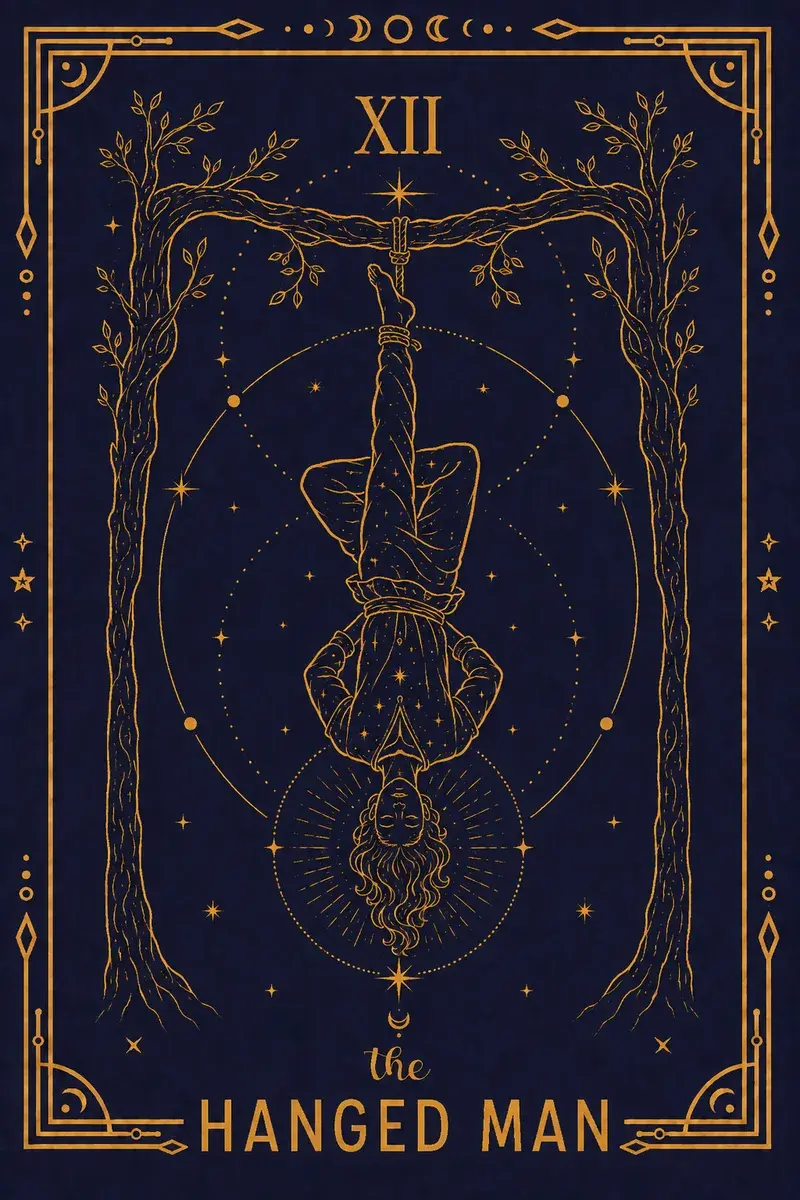
 The Hanged Man
The Hanged Man · Yes or No
Is The Hanged Man a yes or a no?
The Hanged Man in a yes/no reading, plus why the answer is less binary than the question wants it to be.
No
This card leans no. It carries obstruction, ending or delay, and in a straight yes/no draw most readers take it negatively.
The Hanged Man is suspension entered willingly. He is not being punished. The rope is loose, his hands are behind his back by choice, and he could climb down. He stays because the inverted view shows him something the upright one never would.
The halo appears only in this position, which is the tradition making its argument in a single detail: the thing he can see is unavailable from any other angle. Waite was explicit that the card means life in suspension and specifically warned against reading it as martyrdom or as death.
Its one real difficulty is that a chosen pause and an enforced one look identical from outside, and often from inside too.
Why the answer is not really binary
Yes/no readings are the most popular use of tarot and the one it is worst suited to. A seventy-eight card deck built to describe nuance is being asked for one bit of information, and most of what it knows is discarded in the process.
A more useful version of the same draw: read The Hanged Man as what shape this takes, not whether it happens. Pause. Surrender the need to act. A different perspective is the whole point, and it will not arrive while you are still pushing. Sacrifice something now for a view you cannot otherwise get.
The card is precise about what is being given up: not the goal, but the timetable, and the sense of being the one moving things along. That is usually the harder loss.
In an advice position it is one of the few cards that will tell you to do nothing, on purpose, for longer than is comfortable. It is a poor card for a deadline and a good one for a decision that keeps producing the same unsatisfying answer.
Reversed
Reversed, the lean weakens or inverts. Stalling disguised as reflection. Martyrdom, sacrifice performed for an audience. Or a needed pause resisted so hard that the situation forces it on you anyway.
The test the tradition offers for the first is simple and unkind: a genuine pause changes how you see the thing, and stalling leaves it exactly where it was. Six months of thinking about it that has produced no new view is the reversal.
The martyrdom reading deserves its own note, because it is common and it is rarely conscious. A sacrifice being kept account of is not the same as a sacrifice made, and the card reversed is often pointing at the ledger rather than at the giving.
Draw it for yourself
Reading about a card is not the same as drawing one. A single-card reading takes about a minute and answers your question rather than a general one.
More on The Hanged Man
- What does The Hanged Man mean in love?
- What does The Hanged Man mean for career and work?
- What does The Hanged Man mean for money and finances?
- What does The Hanged Man mean for health?
- What does The Hanged Man mean as someone's feelings?
- What is The Hanged Man advising?
- What does The Hanged Man reversed mean?