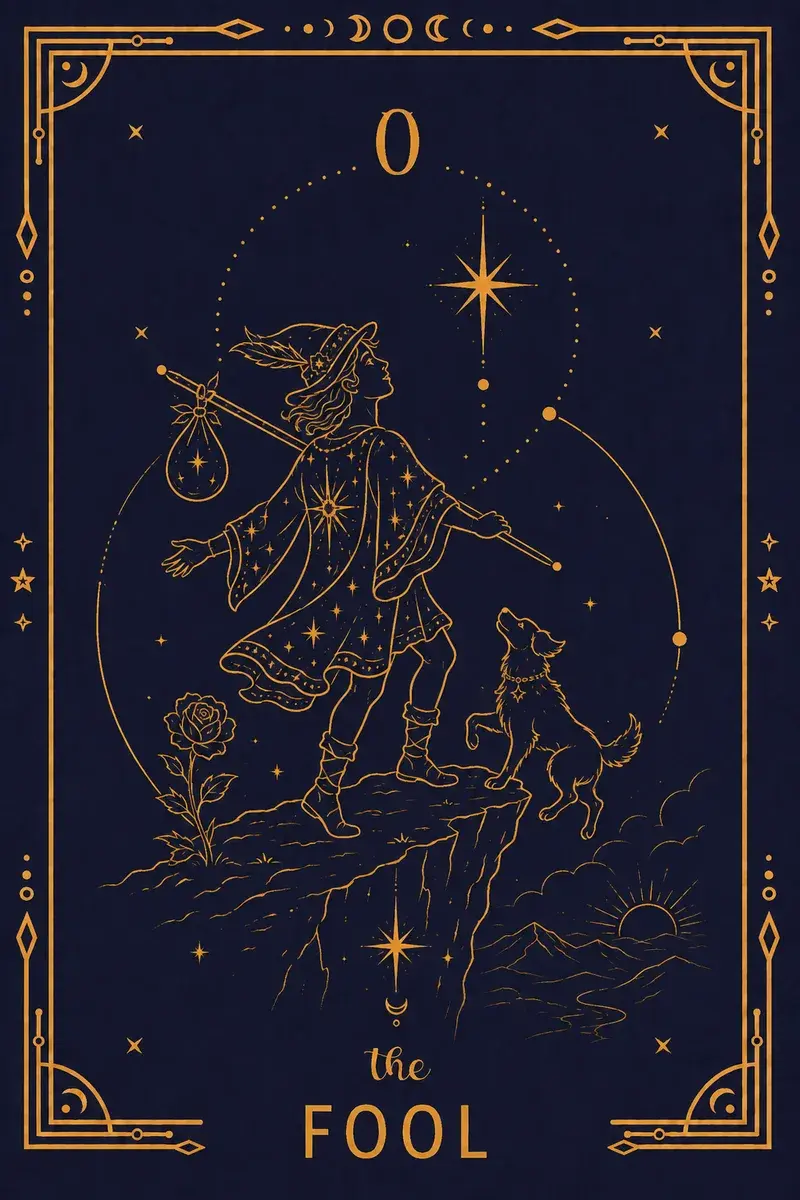
 The Fool
The Fool · Yes or No
Is The Fool a yes or a no?
The Fool in a yes/no reading, plus why the answer is less binary than the question wants it to be.
Yes
This card leans yes. It carries forward movement, and in a straight yes/no draw most readers take it affirmatively.
The Fool is the beginning before the beginning: the moment you step out with no map, no track record and nothing to defend. It is numbered zero because it is not a stage of the journey so much as the willingness to start one, which is why it can be placed at either end of the sequence and still make sense.
The card carries an ambiguity the tradition has never resolved and does not try to. The traveller is either about to step into open air or about to step onto a path the picture does not show, and the dog at his heel is either warning him or hurrying him along. Readers who insist on one answer are adding something. What The Fool reliably describes is the state of not knowing yet, held without panic.
In most spreads it is read less as an event than as a posture: whatever else the reading contains, it is being met with fewer defences than usual.
Why the answer is not really binary
Yes/no readings are the most popular use of tarot and the one it is worst suited to. A seventy-eight card deck built to describe nuance is being asked for one bit of information, and most of what it knows is discarded in the process.
A more useful version of the same draw: read The Fool as what shape this takes, not whether it happens. A genuine new chapter, entered without a plan. Say yes before you feel ready. The card favours beginner energy: curiosity over expertise, movement over analysis, faith that the ground will meet your foot.
What it asks for specifically is the willingness to be visibly inexperienced. The Fool does not reward the person who waits until they can do the thing competently and then arrives looking as though they always could. It rewards starting in public, badly, and letting that be the situation.
It is also the card most associated with not needing the outcome to justify the decision. Where other cards ask what a step will produce, this one asks whether you would take it anyway.
Reversed
Reversed, the lean weakens or inverts. Recklessness dressed up as spontaneity, or the opposite, standing at the edge and refusing to move. Ask which one it is. Reversed, The Fool also points to a leap taken to escape something rather than to reach something, which is the version that most often gets mistaken for courage.
The distinction the tradition draws is about what is behind you. A step taken towards something unknown is the card upright. A step taken away from something known is the same movement with a different engine, and it tends to arrive somewhere similar to where it left.
Also read as potential kept permanently in reserve: the plan described often and never begun, protected from failure by never being tested.
Draw it for yourself
Reading about a card is not the same as drawing one. A single-card reading takes about a minute and answers your question rather than a general one.