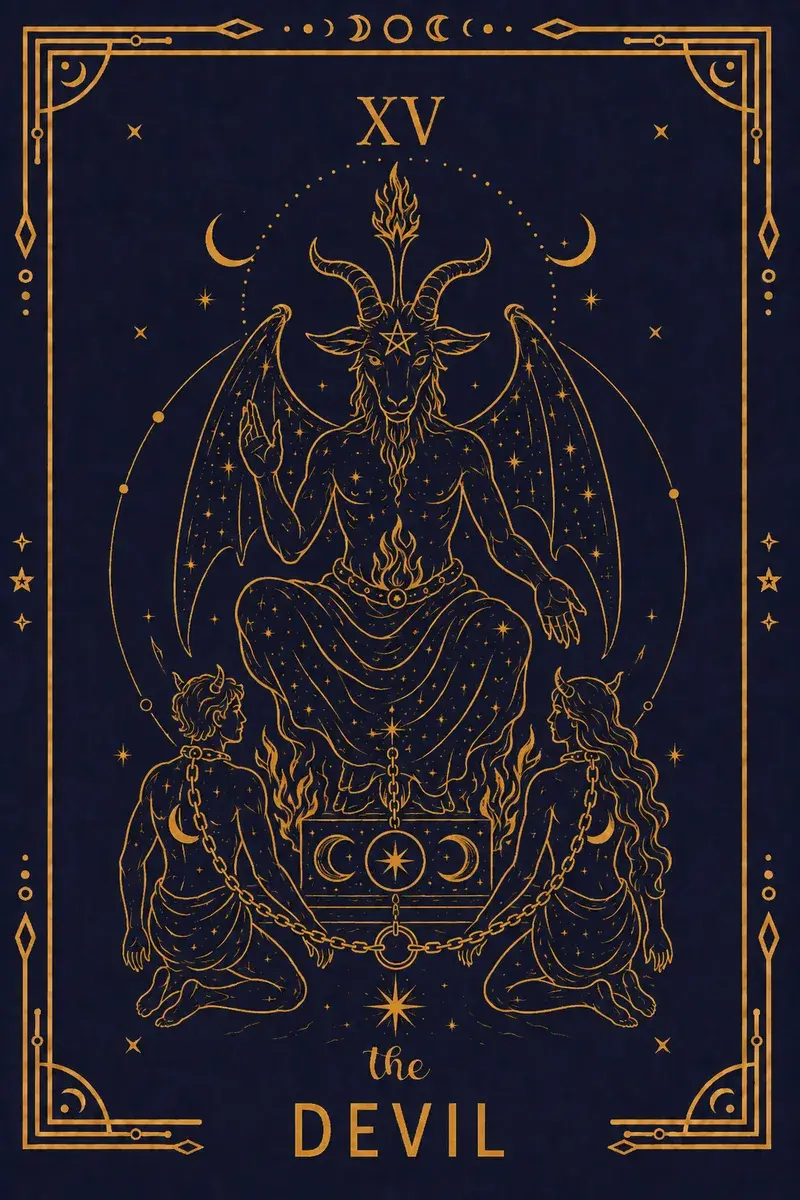
 The Devil
The Devil · Yes or No
Is The Devil a yes or a no?
The Devil in a yes/no reading, plus why the answer is less binary than the question wants it to be.
No
This card leans no. It carries obstruction, ending or delay, and in a straight yes/no draw most readers take it negatively.
The Devil is bondage you are participating in. The chains in the image are loose enough to lift off. The card's entire argument is that the trap requires your cooperation, and that this is both the bad news and the way out.
Waite designed it as the deliberate dark mirror of The Lovers: the same pair, the same nakedness, a different figure above them. The two cards are the same situation with a different thing in charge of it, which is a more useful reading than treating this one as evil.
The reversed pentacle and inverted torch put matter above spirit, and the tradition is careful that this describes a condition rather than pronounces a curse. Nothing on this card is an accusation.
Why the answer is not really binary
Yes/no readings are the most popular use of tarot and the one it is worst suited to. A seventy-eight card deck built to describe nuance is being asked for one bit of information, and most of what it knows is discarded in the process.
A more useful version of the same draw: read The Devil as what shape this takes, not whether it happens. Attachment, compulsion, dependency. A pattern with a real payoff that is costing more than it pays.
The payoff is the part most readings skip and the part that matters. Nothing is maintained for years without giving something back, and a pattern is only understandable once you can say what it is for. The card asks that question rather than demanding the behaviour stop.
It also covers raw materialism and appetite, which it does not moralise about so much as ask you to look at squarely. Wanting things is not the subject. Not being able to look at what you want is.
Reversed
Reversed, the lean weakens or inverts. Breaking the hold. Recognising the chain, reclaiming power, walking out. This is one of the few reversals in the deck that is straightforwardly better news than the upright.
The recognition is the mechanism. The chains are loose in the picture whichever way up the card sits; what changes reversed is that somebody has noticed. The tradition treats seeing clearly as the substantial part of the work rather than the preliminary to it.
Occasionally the opposite: a deepening attachment, or the beginning of one you are not yet calling a problem. The surrounding cards settle which, and the second reading is worth taking seriously when the rest of the spread is uneasy.
Draw it for yourself
Reading about a card is not the same as drawing one. A single-card reading takes about a minute and answers your question rather than a general one.