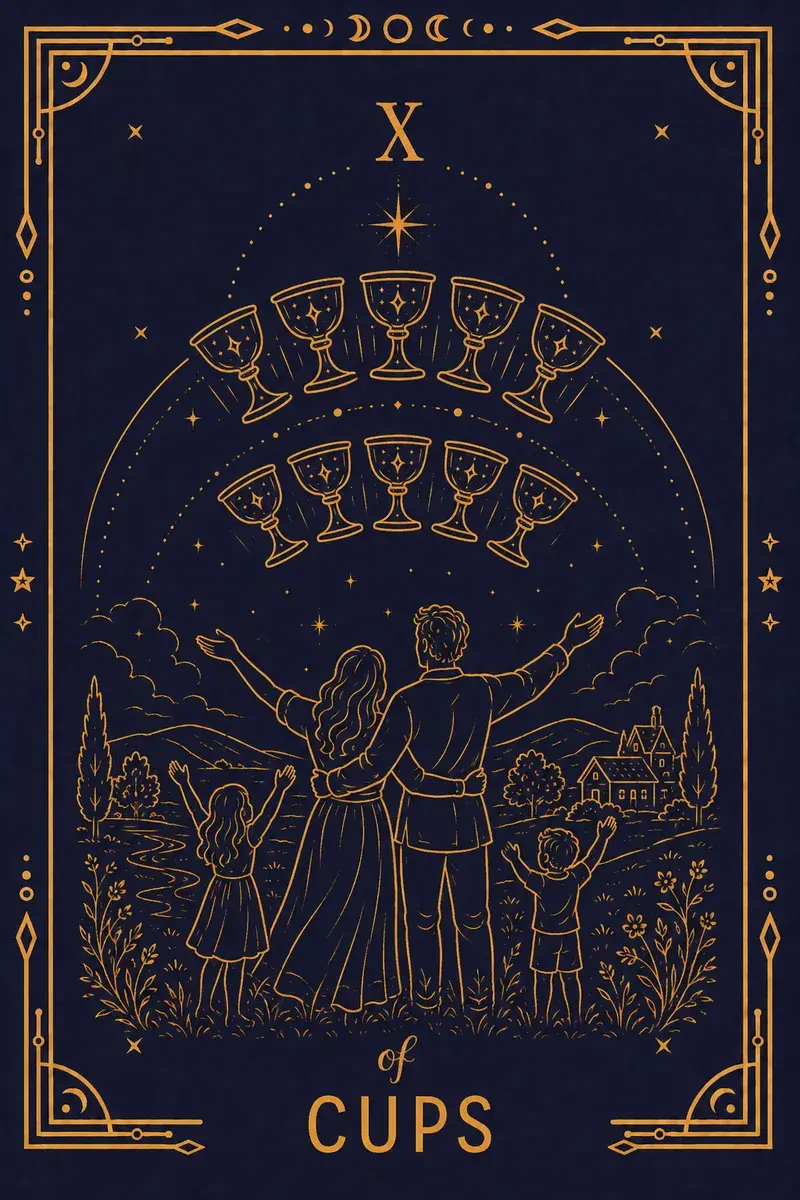
 Ten of Cups
Ten of Cups · Yes or No
Is Ten of Cups a yes or a no?
Ten of Cups in a yes/no reading, plus why the answer is less binary than the question wants it to be.
Yes
This card leans yes. It carries forward movement, and in a straight yes/no draw most readers take it affirmatively.
The Ten is emotional fulfilment shared: family, home, belonging.
Where the Nine is personal satisfaction, the Ten is the same happiness held between people, which is what makes it the suit's true completion rather than its high point.
The composition makes the argument. A couple stand with arms raised towards a rainbow of ten cups, two children dancing beside them, a house on the hill behind. Nobody is looking at the house, and the rainbow is over the people rather than over the property.
Why the answer is not really binary
Yes/no readings are the most popular use of tarot and the one it is worst suited to. A seventy-eight card deck built to describe nuance is being asked for one bit of information, and most of what it knows is discarded in the process.
A more useful version of the same draw: read Ten of Cups as what shape this takes, not whether it happens. Lasting happiness, family harmony, a home that works. Emotional security in the ordinary sense.
It is the card of long-term relational fulfilment rather than of a good moment, and the distinction matters: this describes a condition that has been built and maintained, not an event.
In an advice position it points at the people rather than the circumstances, and it is one of the few cards that will suggest the thing you are working towards is already present in a form you have stopped noticing.
Reversed
Reversed, the lean weakens or inverts. The picture without the feeling. Family tension, a home that looks right and is not.
Also misaligned values about what a good life would even be, which is the deeper version: two people building towards different pictures, each assuming the other wants the same one, discovering the gap around a decision.
The first reading is the more common and the more painful. A household that photographs well and is not happy is a real and lonely place to live, and the card names it without assigning blame.
Draw it for yourself
Reading about a card is not the same as drawing one. A single-card reading takes about a minute and answers your question rather than a general one.