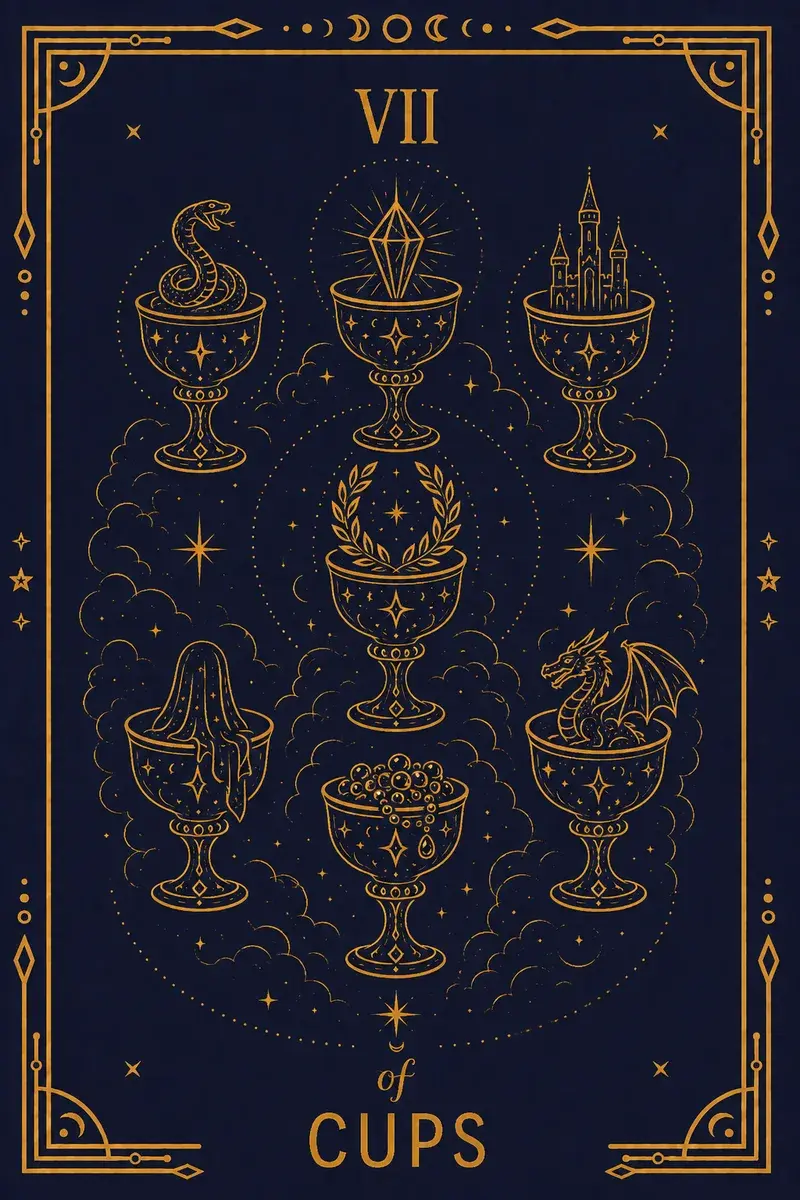
 Seven of Cups
Seven of Cups · Yes or No
Is Seven of Cups a yes or a no?
Seven of Cups in a yes/no reading, plus why the answer is less binary than the question wants it to be.
Not yet
This card does not answer cleanly either way. It points to something unresolved, unseen or still in motion, which in practice usually means "not yet" rather than "no".
The Seven is too many options and no way to tell which are real. Fantasy, projection and genuine possibility, all presented identically.
The card is not against choosing. It is against choosing while dreaming, which is a narrower and more useful objection.
Only one of the seven cups is covered, and the shroud is the point. The most attractive option is the one you cannot see, because you have supplied its contents yourself.
Why the answer is not really binary
Yes/no readings are the most popular use of tarot and the one it is worst suited to. A seventy-eight card deck built to describe nuance is being asked for one bit of information, and most of what it knows is discarded in the process.
A more useful version of the same draw: read Seven of Cups as what shape this takes, not whether it happens. Choice overload, wishful thinking, illusion. Options that look better than they are, with one that is genuinely good hidden among them.
The hidden good option matters. This is not a card that says everything on offer is worthless; it says the presentation is unreliable and the sorting has not been done.
In an advice position it asks for something specific and dull: investigate one of them properly rather than imagining all seven. The card is quite clear that the imagining is the pleasurable part and the reason nothing progresses.
Reversed
Reversed, the lean weakens or inverts. Clarity arriving. Cutting through to the real option and committing to it, usually with some relief.
Or, less happily, retreating into fantasy entirely, where the options have stopped being candidates and become a place to live.
The useful test the tradition offers is time. A choice that has been open for a long time is not being considered, and the card reversed is often the point at which somebody notices how long it has been.
Draw it for yourself
Reading about a card is not the same as drawing one. A single-card reading takes about a minute and answers your question rather than a general one.