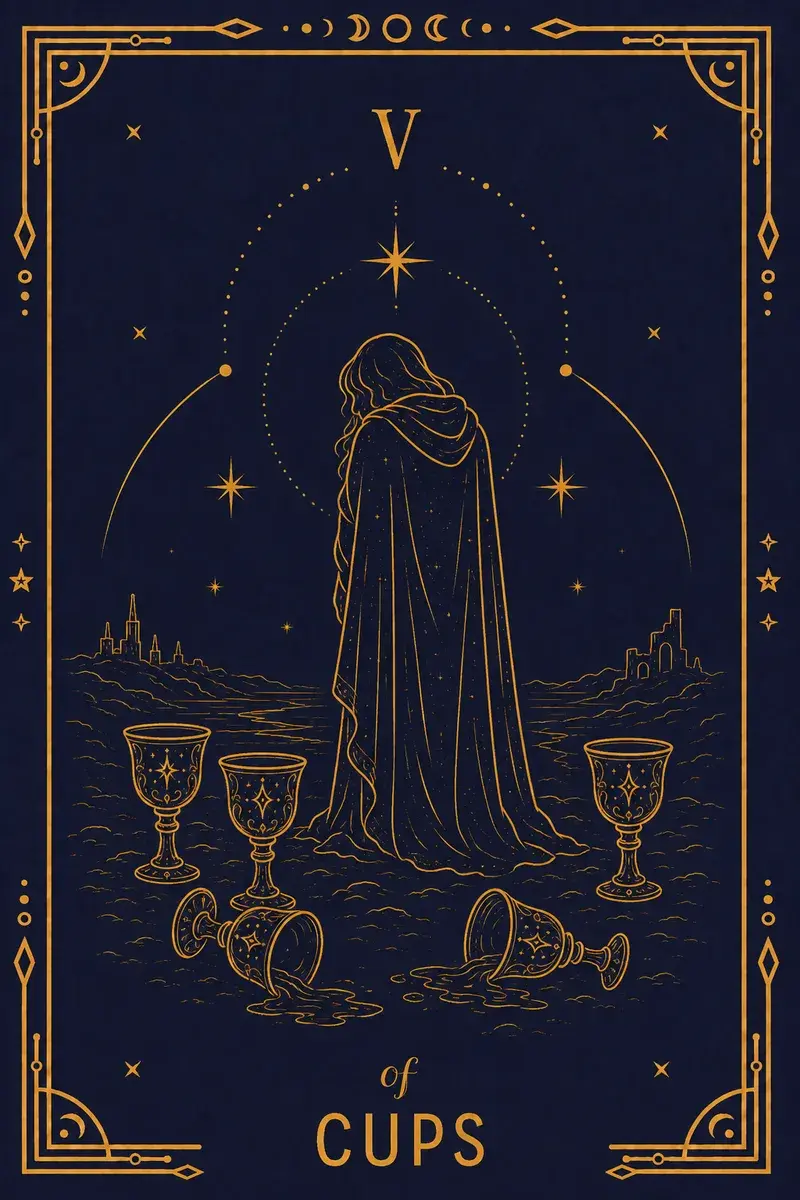
 Five of Cups
Five of Cups · Yes or No
Is Five of Cups a yes or a no?
Five of Cups in a yes/no reading, plus why the answer is less binary than the question wants it to be.
No
This card leans no. It carries obstruction, ending or delay, and in a straight yes/no draw most readers take it negatively.
The Five is grief: real loss, properly felt.
The card's specific observation is that two cups are still standing behind the figure, unseen, because grief narrows the field of vision. That is a description of how loss works rather than a criticism of anybody experiencing it.
Everything needed for the recovery is already in the picture, positioned exactly where he is not looking: the two upright cups, the bridge, the castle across the river. The card does not say when he will turn round, and it is careful not to suggest he should have already.
Why the answer is not really binary
Yes/no readings are the most popular use of tarot and the one it is worst suited to. A seventy-eight card deck built to describe nuance is being asked for one bit of information, and most of what it knows is discarded in the process.
A more useful version of the same draw: read Five of Cups as what shape this takes, not whether it happens. Loss, regret, disappointment. Mourn it. The card does not rush you and neither should a reading of it.
What it adds, quietly and without pressure, is that the situation is not total. At some point turning around is the work, and the card is deliberately silent about when that point arrives.
In an advice position it is one of the few that gives permission rather than instruction: feel it properly and completely, because the versions that are hurried leave something running.
Reversed
Reversed, the lean weakens or inverts. Acceptance beginning. Turning to see what remains, and finding it is more than it looked.
Or grief avoided rather than moved through, which extends it. That is the reading worth watching for, and it usually looks like coping unusually well: back at work immediately, nobody troubled, nothing said.
The tradition treats premature recovery as a form of postponement rather than as strength, and the card reversed frequently arrives some years after the loss it refers to.
Draw it for yourself
Reading about a card is not the same as drawing one. A single-card reading takes about a minute and answers your question rather than a general one.