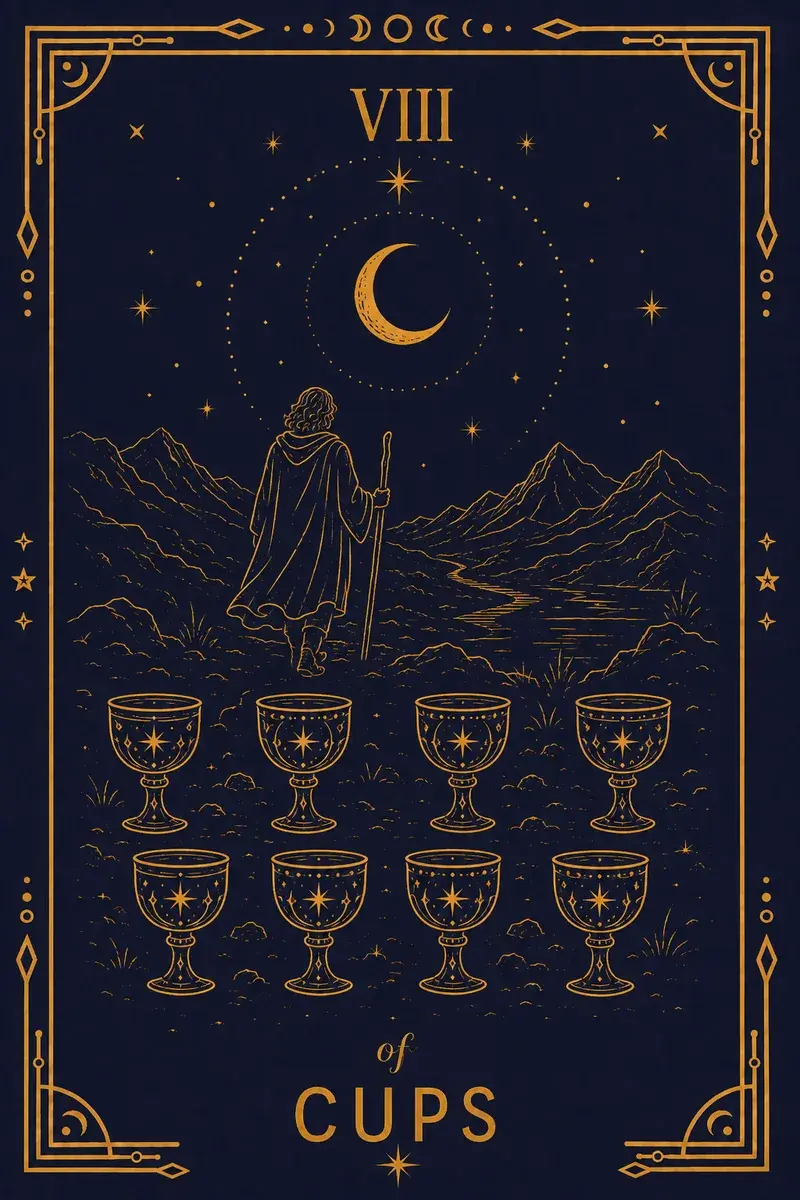
 Eight of Cups
Eight of Cups · Yes or No
Is Eight of Cups a yes or a no?
Eight of Cups in a yes/no reading, plus why the answer is less binary than the question wants it to be.
No
This card leans no. It carries obstruction, ending or delay, and in a straight yes/no draw most readers take it negatively.
The Eight is walking away from something that is not broken.
Nothing failed. It simply stopped being enough, and the honest response is to leave rather than to stay and pretend. The cups are stacked neatly and none of them is knocked over, which is the detail that separates this card from every other departure in the deck.
There is a visible gap in the stack. Something was missing rather than ruined, and the figure has decided that the gap matters more than the eight that are present. The moon eclipses the sun above him, and he does not look back.
Why the answer is not really binary
Yes/no readings are the most popular use of tarot and the one it is worst suited to. A seventy-eight card deck built to describe nuance is being asked for one bit of information, and most of what it knows is discarded in the process.
A more useful version of the same draw: read Eight of Cups as what shape this takes, not whether it happens. Departure, a search for deeper meaning, leaving something that has been outgrown. Difficult and correct.
The card is about integrity rather than escape, and the tradition draws that line carefully: leaving because a thing is wrong for you is this card, and leaving because something is hard is a different one.
In an advice position it gives permission that people rarely give themselves: you are allowed to leave something good. No further justification is required, and the card is clear that waiting for one produces years rather than a decision.
Reversed
Reversed, the lean weakens or inverts. Staying too long out of guilt or fear. Or drifting away without ever deciding to, which costs both people more than a departure would.
Sometimes returning to what you left, which the card treats as a real option rather than a failure. Not every walking away turns out to have been right, and the tradition is unusually undogmatic here.
The reading worth watching is the exit that is being performed rather than taken: talking about leaving for years is its own arrangement, and it is more comfortable than either staying or going.
Draw it for yourself
Reading about a card is not the same as drawing one. A single-card reading takes about a minute and answers your question rather than a general one.